
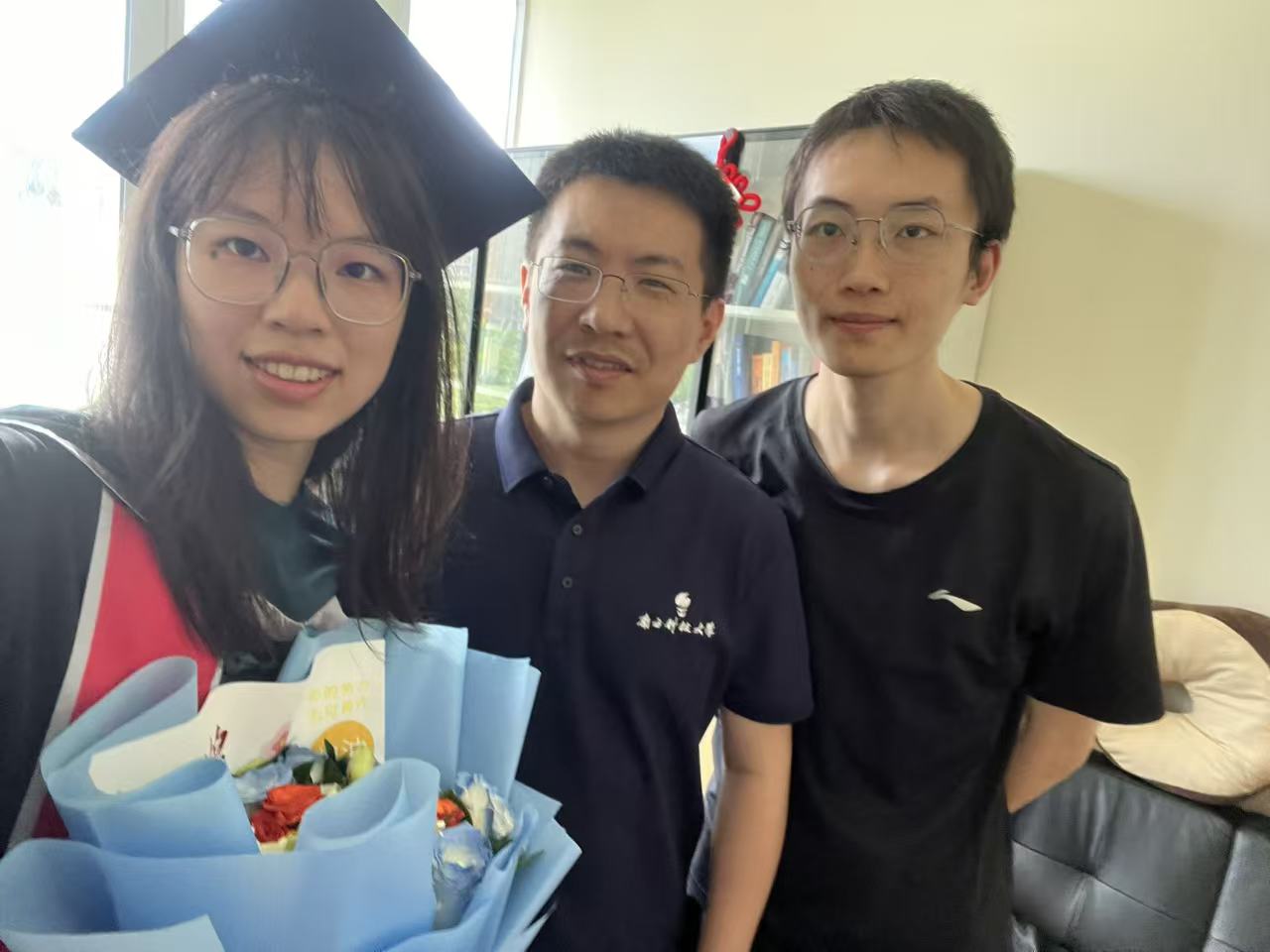
Junyi Ye’s research explores multiphase interfacial reactions and bubble dynamics in microfluidic systems. She observed the entire evolution of hydrogen bubbles—from nucleation and growth to encapsulation by polymethylhydrosiloxane (PMH) droplets—during alkaline hydrolysis. Her work revealed how sodium hydroxide and the nonionic surfactant Tween 20 regulate bubble growth. Building on the sharp decrease in surface energy during encapsulation, she developed a thermodynamic criterion for the critical bubble radius and proposed a model for estimating the surface tension of PMH and the PMH–water interfacial tension from changes in bubble size. These findings offer new insights into microscale interfacial reaction dynamics and the safe storage and transport of hydrogen. After graduation, Junyi will continue her studies at Yale University in the United States.
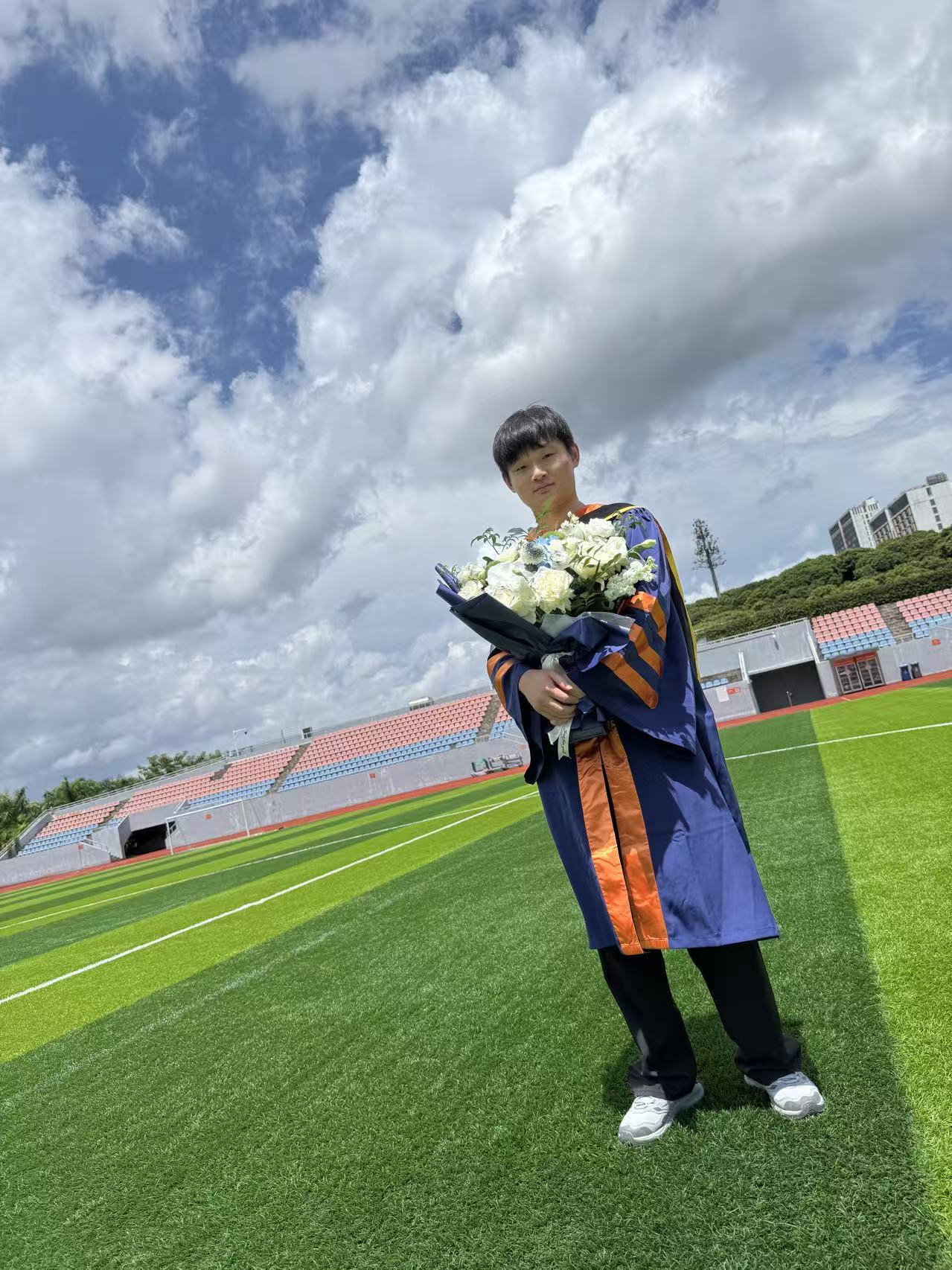
Shaodong Wen studied mass transfer and particle transport in multicomponent fluids confined within microstructures. By combining scaling analysis, theoretical modeling, and numerical simulations, he examined the interplay between convection and diffusion in dead-end pores. He also explored how traveling-wave wall deformation can enhance the mixing of multicomponent fluids. His work highlighted the important role of density-gradient-driven convection in transport enhancement and led to the development of related theoretical and numerical models. The results contribute to a better understanding of fluid mixing and particle transport in microfluidic systems. After graduation, Shaodong will join Xinkailai.
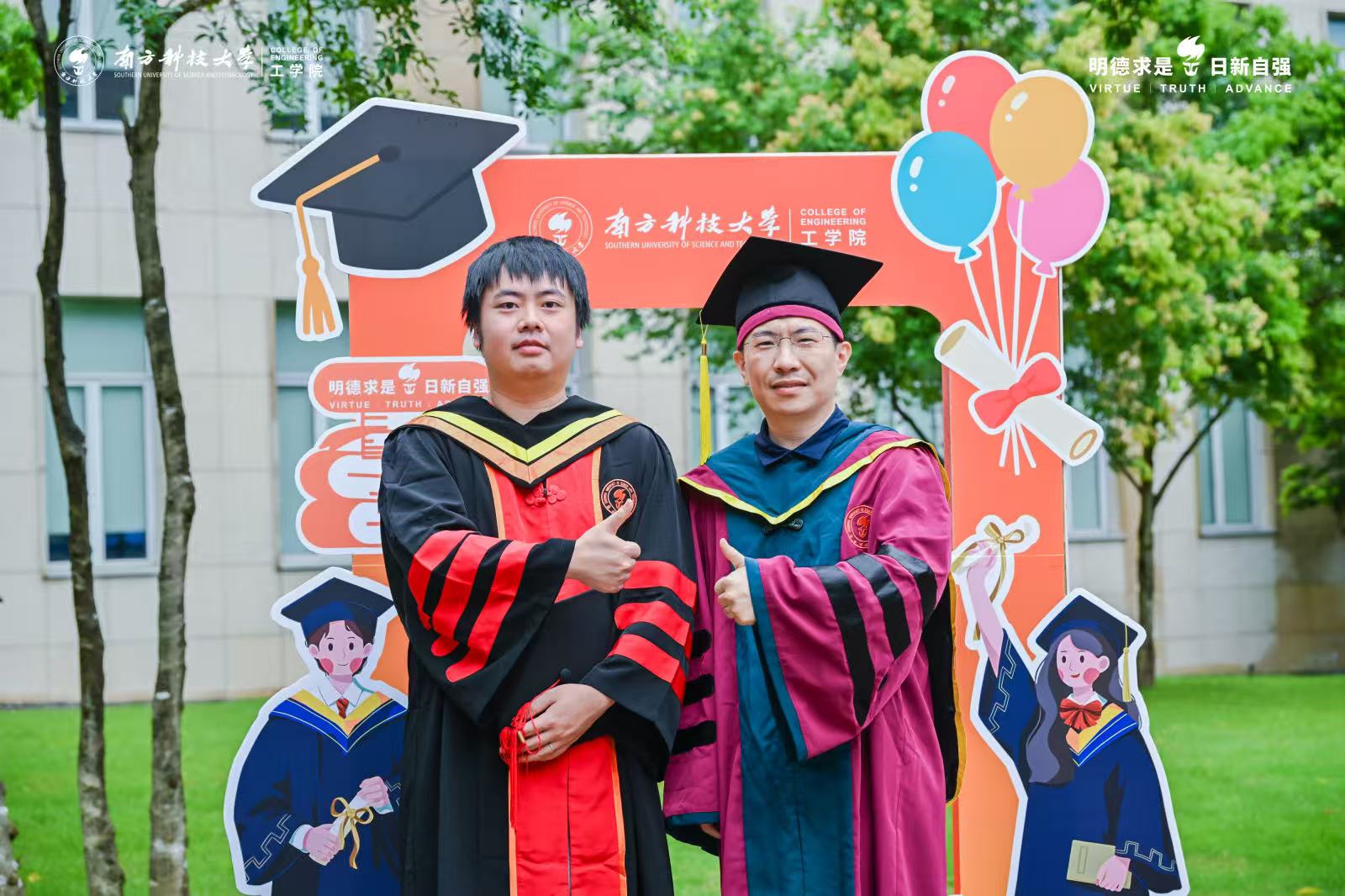
Xiangwei Li focused his doctoral research on coupled interfacial flows in multicomponent fluid systems, particularly solutal Marangoni instability and self-propelled droplets. Using a phase-field/diffuse-interface approach, he developed an NSAC numerical framework that couples the phase, flow, and concentration fields. By combining linear stability analysis, direct numerical simulations, and experimental comparisons, he examined Marangoni instability, diffuse-interface thickness effects, and droplet self-propulsion. His work connected diffuse-interface and sharp-interface descriptions in the thin-interface limit and clarified how species transport across an interface of finite thickness affects instability and droplet motion. The close agreement between simulations and experiments further supports the reliability of his findings. After completing his Ph.D., Xiangwei will remain with the group as a postdoctoral researcher.